

प्याज काटने पर आँसू क्यों आते हैं? एक रसोई विज्ञान प्रयोग
September 12, 2026
चेन्नई की बाढ़ से दिल्ली के धुंध तक: भारत के जलवायु संकट को आसान भाषा में समझिए
September 18, 2026
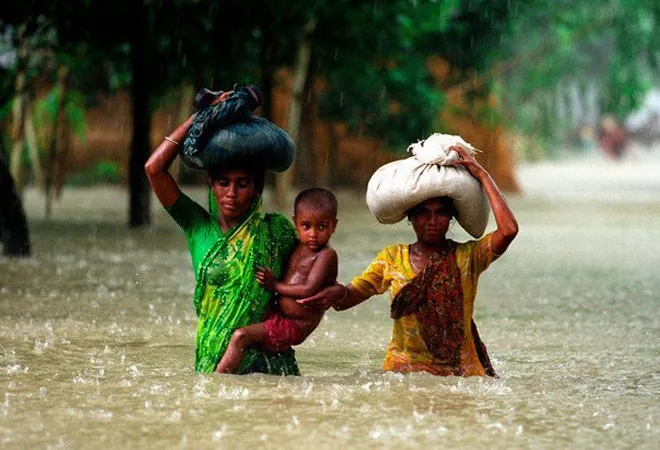
If you’ve grown up in India in the last decade, chances are you’ve already lived through a “climate event” without even calling it that. Maybe your school shut down because the smog in Delhi made it unsafe to breathe. Maybe your relatives in Chennai watched their street turn into a river. Maybe summer vacations in your town now start a full month earlier because the heat has become unbearable.
Climate change isn’t a topic locked away in textbooks or international conferences anymore — it’s showing up in your daily life. Let’s break down what’s actually happening, why it matters to you, and what can be done about it.
It’s Not One Crisis — It’s Many, All Connected
People often talk about “climate change” as if it’s a single problem. In reality, it looks different depending on where you live in India.
In the north — the smog problem. Every winter, Delhi and much of the Indo-Gangetic plain get trapped under a thick layer of polluted air. Vehicle emissions, industrial smoke, and crop stubble burning combine with cooler temperatures that trap pollutants close to the ground. Schools shut, flights get delayed, and doctors report a spike in respiratory illness. This is a mix of pollution and climate patterns working together to make the air genuinely dangerous to breathe.
In the south and east — the flood problem. Cities like Chennai and Mumbai are seeing rainfall patterns that no longer follow the old rules. Instead of steady monsoon rain spread across months, we now get long dry spells followed by extreme downpours that dump weeks’ worth of rain in a single day. Cities built for a gentler climate simply don’t have the drainage to cope, and the result is flooding that can paralyze a metro city for days.
Everywhere — the heat problem. Heatwaves are arriving earlier, lasting longer, and hitting temperatures that used to be rare. This affects farmers working in fields, laborers on construction sites, and students trying to concentrate in classrooms without proper cooling.
These aren’t separate issues. They’re different symptoms of the same underlying cause: a warming planet that is disrupting weather patterns humans have relied on for centuries.
Why Is This Happening?
At the simplest level, burning fossil fuels — coal, petrol, diesel — releases gases like carbon dioxide into the atmosphere. These gases trap heat from the sun, a bit like a blanket wrapped around the Earth. As we’ve burned more fuel over the last 150 years, that “blanket” has gotten thicker, and the planet has gotten warmer.
A warmer planet doesn’t just mean hotter days. It means more energy in the atmosphere, which makes weather more extreme in both directions — longer droughts and heavier floods, harsher winters in some places and unbearable summers in others.
Why Should Students Care?
It’s easy to think of climate change as “someone else’s problem” — a government issue, a scientist’s issue, a future generation’s issue. But here’s the thing: you’re not just going to inherit this problem. You’re going to spend your entire career working, building, and living inside it.
This is already changing what jobs exist, what skills are valuable, and which industries are growing. Renewable energy, sustainable agriculture, climate policy, and environmental data analysis are all fields expanding rapidly in India — and they need young people who understand both the science and the local context.
Understanding climate change isn’t just about protecting the planet. It’s about understanding the world you’re about to build your future in.
What Can You Actually Do?
You don’t need to become a scientist or a policymaker to make a difference. Some starting points:
- Get informed about your own city. Look up your local air quality index or your city’s flood history. Understanding the specific risks where you live makes the issue feel real, not abstract.
- Rethink small daily habits. How you travel, how much you waste, and how you use electricity all add up — especially when multiplied across millions of students.
- Talk about it. Climate change is still under-discussed in many classrooms. Bringing it up in school projects, debates, or casual conversations helps normalize it as something everyone should understand.
- Explore it as a career path, if it interests you. Environmental science, sustainability studies, and climate-related engineering are growing fields with real opportunities in India.
The Bottom Line
Chennai’s floods and Delhi’s smog might look like unrelated news stories, but they’re chapters of the same story — a changing climate reshaping how Indians live, work, and study. The more clearly students understand this story, the better equipped they’ll be to respond to it, whether that means changing a habit, choosing a career, or simply making informed decisions as a citizen.
Climate change is complicated, but understanding it doesn’t have to be. Start with your own city, your own habits, and your own questions — the bigger picture will start to make sense from there.