

रबीन्द्रनाथ टैगोर: भारतीय साहित्य, संगीत और शिक्षा के अद्वितीय साधक
June 11, 2026
INTERNATIONAL YOGA DAY June 21 — A Global Celebration of Mind, Body & Soul
June 23, 2026
Introduction
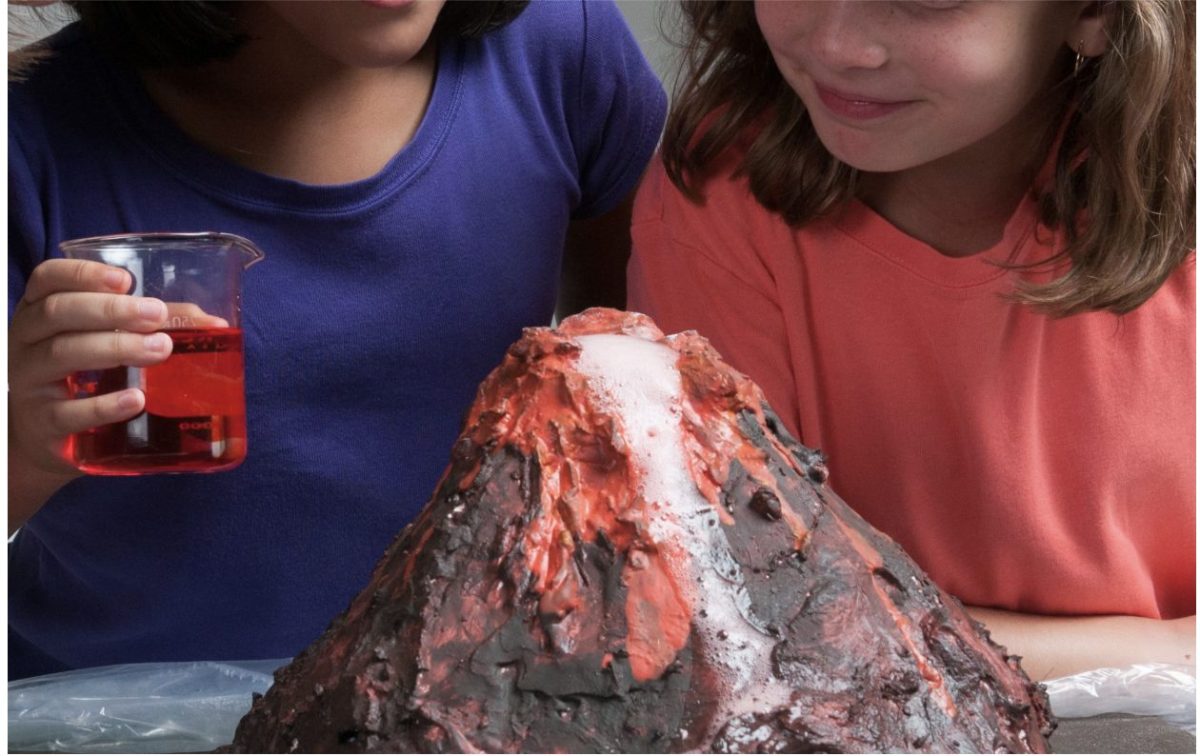
A volcano eruption is one of nature’s most dramatic events. In this experiment, we recreate a mini volcano using household materials like baking soda, vinegar, dish soap, and clay or paper. When baking soda and vinegar mix, they produce carbon dioxide gas, which causes the “eruption” or foaming effect.
This simple science project is ideal for students because it is easy to perform, affordable, and highly engaging. It not only looks impressive but also teaches an important science concept in a practical way.
Objective of the Experiment
The main objective of this experiment is to observe the reaction between an acid and a base and understand how gas is produced during the process.
By doing this activity, students can learn:
- How chemical reactions work
- What happens when an acid and a base combine
- How gas formation creates pressure and foam
- How science experiments can model real-world natural phenomena
Materials Required
To perform this experiment, you will need:
- Baking soda
- Vinegar
- Dish soap
- Food colouring or red paint
- A small cup or bottle
- Clay, paper, or modelling material to build the volcano shape
- A tray or large plate
- Water
- Spoon
- Funnel, if available
Procedure: How to Make a Volcano Eruption Experiment
Follow these simple steps to create your own volcano eruption:
Step 1: Build the Volcano
Place a small cup or bottle in the center of a tray. Use clay, paper, or modelling material to build a volcano shape around it. Leave the opening at the top uncovered so that ingredients can be poured inside.
Step 2: Add Baking Soda
Put about 2 to 3 tablespoons of baking soda into the cup or bottle.
Step 3: Add Dish Soap
Add a few drops of dish soap. This helps create more foam and makes the eruption look bigger.
Step 4: Add Food Colouring
Add red or orange food colouring to make the eruption look like real lava.
Step 5: Pour in Vinegar
Slowly pour vinegar into the cup. As soon as the vinegar touches the baking soda, the reaction begins and foam starts rising out of the volcano.
Step 6: Observe the Eruption
Watch the bubbles and foam flow down the sides of the volcano like lava. Observe how quickly the reaction starts and how much foam is produced.
Science Behind the Experiment
This experiment works because baking soda and vinegar react with each other.
- Baking soda is a base
- Vinegar is an acid
When they combine, they produce carbon dioxide gas. The gas gets trapped in the soap, creating bubbles and foam. That is why the mixture expands and spills out of the volcano like an eruption.
This reaction is not the same as a real volcanic eruption, but it is a very useful model for understanding how pressure and release of gas can cause movement and force.
Simple Chemical Explanation
Baking soda + Vinegar → Carbon dioxide + Water + Other substances
The carbon dioxide gas is what causes the bubbling and foaming effect.
Observation
During the experiment, students will notice:
- Immediate bubbling when vinegar is added
- Foam rising from the volcano
- Overflow of the mixture like molten lava
- A strong release of gas
- The eruption slowing down after the reaction finishes
Students can also repeat the experiment with different quantities of baking soda and vinegar to compare results.
Why This Is a Great School Science Project
This volcano experiment is popular because it is:
- Easy to prepare
- Safe for children under supervision
- Low cost
- Visually attractive
- Scientifically educational
- Suitable for blog content, presentations, and classroom demonstrations
It also encourages students to write down observations, explain results, and present their findings in a creative way.
Real-Life Science Connection
Although this is a simple chemical reaction, it connects to larger science concepts. Real volcanoes erupt when pressure builds up inside the Earth and hot material escapes through cracks in the surface. Similarly, in this experiment, gas builds up and pushes the foam outward.
This makes the activity a great way to introduce students to:
- Volcanology
- Pressure and gas expansion
- Chemical reactions
- Earth science
Safety Tips
Even though this experiment is safe, it is important to follow a few precautions:
- Perform the experiment on a tray or in an open area
- Do not taste any of the materials
- Keep the experiment away from eyes
- Use adult supervision for younger children
- Clean the area after the experiment is completed
Conclusion
The volcano eruption experiment with baking soda and vinegar is one of the most exciting and educational science activities for students. It is simple to perform, easy to understand, and fun to observe. More importantly, it helps learners explore the basics of chemistry and earth science through hands-on practice.
For students participating in science blogs or school contests, this experiment is an excellent topic because it combines creativity, observation, and scientific explanation in one engaging project.
FAQs
1. Why does baking soda and vinegar make a volcano erupt?
Because they react to produce carbon dioxide gas, which creates bubbles and foam.
2. Is this experiment safe for children?
Yes, it is safe when done under adult supervision and with basic precautions.
3. Can I make the eruption bigger?
Yes. You can use more baking soda, more vinegar, and dish soap to create a larger foamy eruption.
4. What is the scientific lesson behind this experiment?
It teaches chemical reactions, acid-base interaction, gas formation, and pressure.
5. Can this experiment be used for a school blog contest?
Absolutely. It is one of the best science experiments for blog writing because it is simple, visual, and educational.




2 Comments
Great blog! Very informative
great blog