

बीज से पौधा: अंकुरण की अद्भुत यात्रा
July 31, 2026
मंगल ग्रह: लाल ग्रह के रहस्यों की गहराई में
August 6, 2026
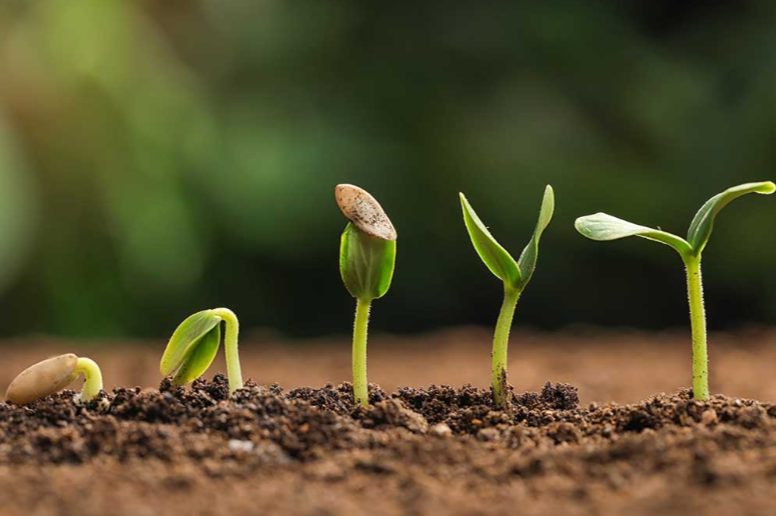
A tiny, dry seed — lifeless as it may look — carries an entire story of life waiting to unfold. Bury it in the soil, and within days it breaks through the earth, unfurls green leaves, and slowly transforms into a full-grown plant. This process feels so ordinary that we rarely stop to notice the science behind it. Let’s take a closer look at germination — what it takes, how it happens step by step, and a few fascinating facts along the way.
What Exactly Is Germination?
Germination is the process by which a dormant seed “wakes up” and begins developing into a new plant. In simple terms, it’s the seed’s journey from sleep to life. Every seed already contains a tiny embryo inside it, waiting for the right conditions to become active and start growing.
The Four Conditions Every Seed Needs
Not every seed sprouts on its own — a few specific conditions have to come together first.
1. Water (Moisture) A seed’s outer coat is typically hard and dry. Once it absorbs water, this coat softens and the seed begins soaking up moisture — a process called imbibition. Water activates enzymes inside the seed that begin breaking down stored food and delivering it to the embryo.
2. The Right Temperature Every plant species has an ideal temperature range for germination — neither too cold nor too hot. Most seeds germinate best between 20°C and 30°C (68°F–86°F). Too cold, and enzyme activity slows down; too hot, and the seed can dry out and die before it even gets a chance to sprout.
3. Oxygen During germination, the seed’s respiration rate increases sharply, which means it needs a steady oxygen supply. This is exactly why seeds shouldn’t be planted too deep or left submerged in water — a lack of oxygen can cause them to rot instead of sprout.
4. Suitable Soil and Space Interestingly, light isn’t essential for every seed to germinate — some actually sprout better in darkness. But loose, well-aerated, nutrient-rich soil plays a huge role in helping the roots spread and establish themselves.
The Stages of Germination — Step by Step
Stage 1: Water Absorption The seed begins absorbing moisture from the soil. This causes it to swell, and the outer seed coat starts to crack open.
Stage 2: Enzymes Activate Once water enters, enzymes stored inside the seed spring into action. They convert stored food (like starch) into simple sugars, giving the embryo the energy it needs to grow.
Stage 3: The Root Emerges (Radicle Emergence) The first structure to break through is a tiny root-like part called the radicle. It grows downward, anchoring the seed and searching the soil for water and nutrients.
Stage 4: The Shoot Pushes Upward (Plumule Emergence) Next, a shoot called the plumule emerges and grows toward the soil surface. This eventually develops into the plant’s stem and leaves.
Stage 5: Photosynthesis Begins Once the seedling breaks through the soil and reaches sunlight, its leaves turn green as chlorophyll develops, and the plant starts making its own food. From this point on, it no longer depends on the food stored in the seed — it becomes fully self-sufficient.
Two Types of Germination
In botany, germination is broadly classified into two types:
- Epigeal Germination: The cotyledons (seed leaves) are pushed above the soil surface. Example: beans, pumpkin.
- Hypogeal Germination: The cotyledons stay below the soil, and only the shoot emerges above ground. Example: peas, maize, chickpeas.
Try This Simple Experiment at Home
This makes for a great hands-on science activity, especially for kids:
- Place a damp cotton ball or tissue paper in a clear glass jar.
- Add a few seeds — chickpeas or kidney beans work well.
- Keep the jar in a sunny spot and lightly moisten the cotton every day.
- Within 2–3 days, you’ll see roots appear, followed by a shoot.
It’s a simple way to make the invisible visible — turning germination from a textbook concept into something kids can watch happen with their own eyes.
Why Understanding This Matters
Germination isn’t just a biological process — it’s the foundation of the entire food chain and ecosystem. Farmers rely on this knowledge to decide which crops to sow in which season, how deep to plant the seeds, and how much irrigation they’ll need. This understanding is fundamental to both successful farming and food security.
Conclusion
The entire process hidden inside a small seed is one of nature’s most elegant and precisely orchestrated events. Water, temperature, oxygen, and the right soil — when these four elements come together, they bring a seemingly lifeless seed to life. So the next time you see a plant pushing its way up through the soil, remember — it’s not just a plant. It’s science, quietly telling its story.
Did you know? The oldest seed ever successfully germinated was nearly 2,000 years old. Scientists in Israel grew a date palm from an ancient seed found at Masada — the resulting tree was fittingly named “Methuselah.”