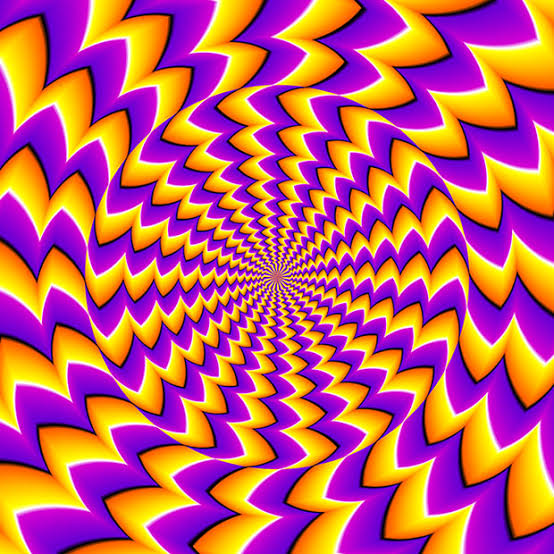
ऑप्टिकल इल्यूजन प्रयोग: कैसे हमारी आँखें हमें धोखा देती हैं और यह मस्तिष्क की जीव विज्ञान (ब्रेन बायोलॉजी) के बारे में क्या बताता है
September 22, 2026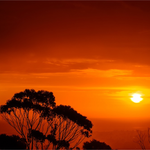
सूर्यास्त के समय आसमान लाल क्यों हो जाता है? (जबकि दिनभर यह नीला रहता है)
September 25, 2026
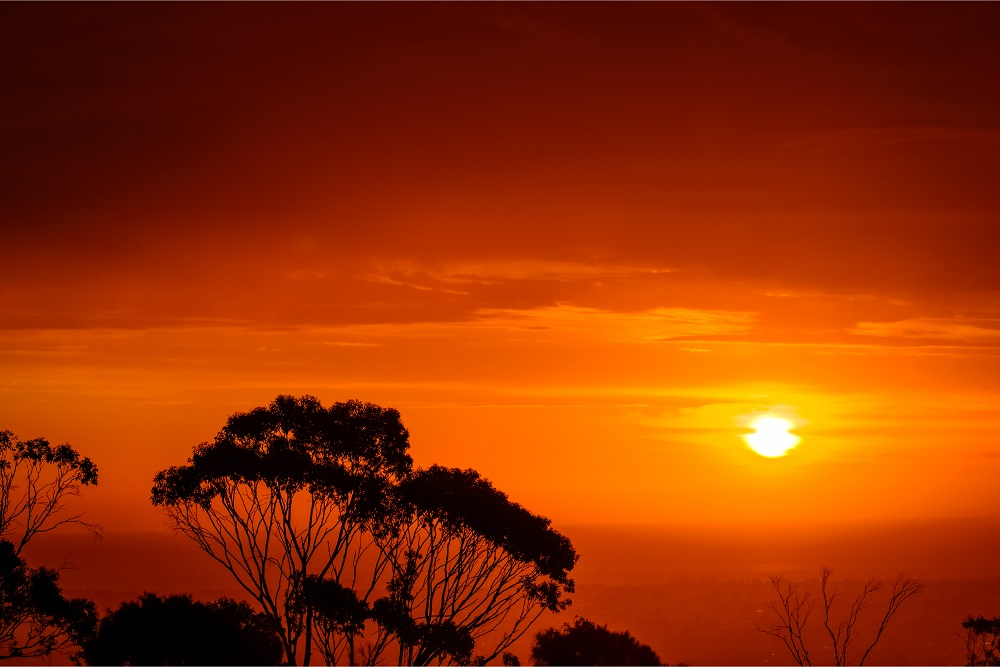
Look up right now — actually, wait until evening for this one. If it’s a clear day, the sky above you is a bright, cheerful blue. But watch that same sky an hour before sunset, and it slowly bleeds into orange, then red, sometimes even pink and purple. Same sky. Same sun. Completely different colors.
So what’s actually going on up there?
It’s Not the Sky That’s Changing — It’s the Light
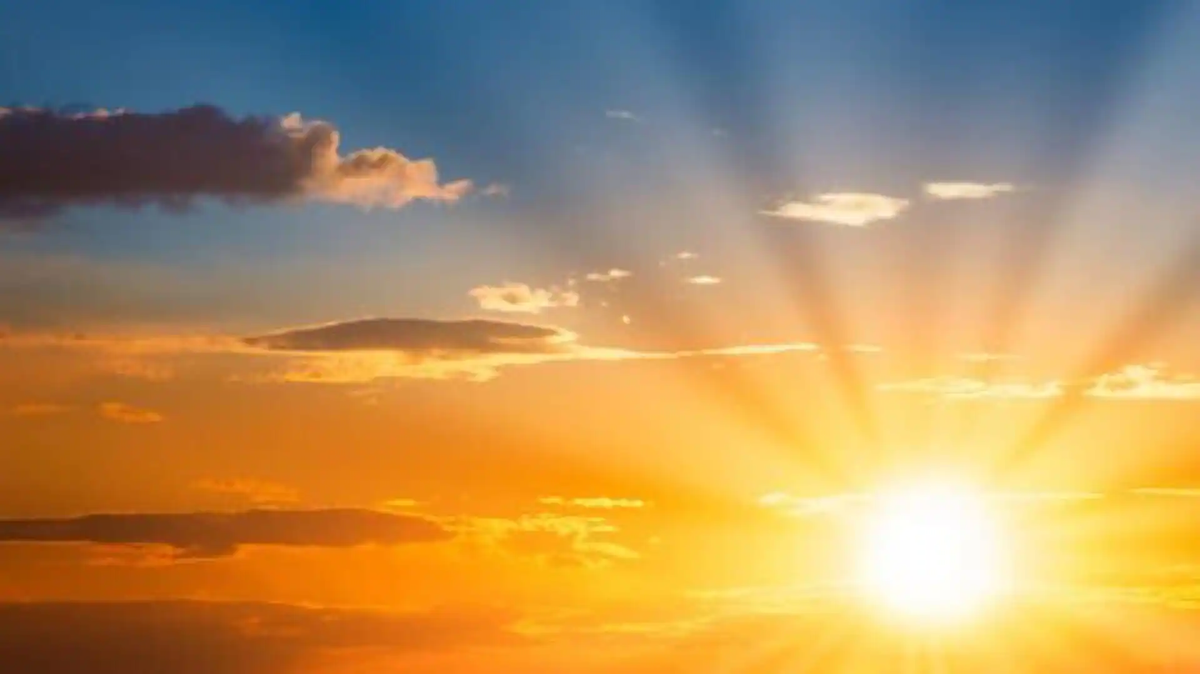
Sunlight looks white to our eyes, but it’s actually made up of all the colors of the rainbow mixed together — red, orange, yellow, green, blue, and violet. You can see this for yourself with a simple prism, or even more simply, after rain, when sunlight splits into a rainbow.
Each of these colors is a wave of light, and each wave has a different wavelength. Violet and blue light have short, tightly packed wavelengths. Red and orange light have longer, more stretched-out wavelengths.
This difference in wavelength is the entire reason the sky changes color.
Meet Rayleigh Scattering (Don’t Worry, It’s Simpler Than It Sounds)
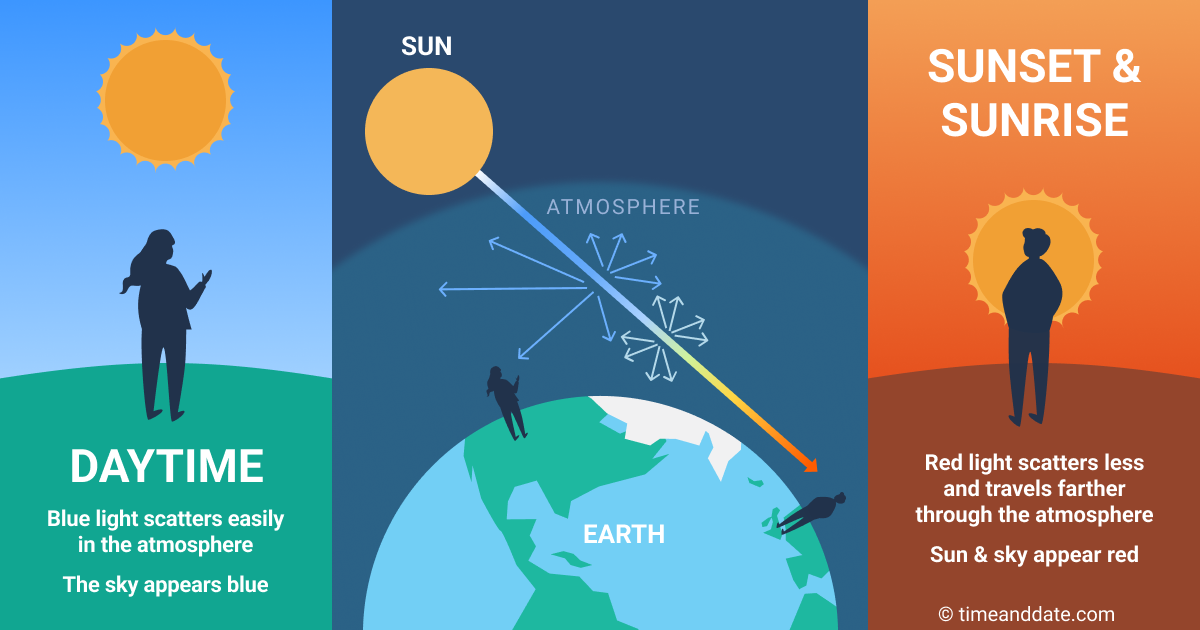
Earth’s atmosphere isn’t empty — it’s full of tiny gas molecules (mostly nitrogen and oxygen). When sunlight travels through the atmosphere, it crashes into these molecules and scatters in different directions, like a ball bouncing off obstacles.
Here’s the key part: shorter wavelengths scatter much more easily than longer ones.
Blue and violet light, with their short wavelengths, get scattered all over the sky by these gas molecules. Red and orange light, with their long wavelengths, mostly just push straight through without scattering much.
This effect is called Rayleigh scattering, named after the physicist Lord Rayleigh, who worked out the math behind it in the 1870s.
(Quick side note: violet actually scatters even more than blue. So why isn’t the sky violet? Because our eyes are more sensitive to blue, and some violet light gets absorbed high in the atmosphere before it reaches us. Blue wins by default.)
So Why Does the Sky Turn Blue During the Day?
At midday, the sun is almost directly overhead. Sunlight has to travel through the shortest possible path of atmosphere to reach your eyes. Along this short path, blue light gets scattered in every direction — including straight down toward you. Wherever you look in the sky, you’re catching scattered blue light. That’s why the whole sky appears blue, not just the spot where the sun is.
Then Why Red and Orange at Sunset?
At sunrise and sunset, the sun sits low on the horizon — not overhead. This changes everything about the light’s journey.
Sunlight now has to travel through a much longer stretch of atmosphere to reach your eyes — think of it as a long, slanted tunnel instead of a short, straight drop.
Over this longer path:
- Almost all the blue and violet light gets scattered away long before it reaches you — much of it never makes it to your eyes at all.
- Red and orange light, being more stubborn (longer wavelength, harder to scatter), survives the journey and reaches your eyes directly.
What you’re left seeing is the light that didn’t get scattered away — and that’s mostly red, orange, and pink. That’s the sunset.
A Simple Way to Picture It
Imagine sunlight as a group of runners — blue runners and red runners — all trying to reach the finish line (your eyes).
- At noon, the race track is short. Even the easily-distracted blue runners make it to the finish line without much trouble. Result: sky looks blue.
- At sunset, the race track is very long. The blue runners keep getting knocked off course along the way and never finish. Only the tougher red and orange runners make it all the way. Result: sky looks red.
Why Some Sunsets Are More Dramatic Than Others
Not every sunset looks like a painting. The intensity depends on what’s in the atmosphere that evening:
- Dust, smoke, or pollution particles scatter light too, and can intensify reds and oranges — which is why sunsets after a dusty day or near a city can look especially vivid.
- Humidity and water vapor scatter light differently and can mute or soften colors.
- Clouds act like screens, catching and reflecting the red/orange light, which is why a sky with scattered clouds often puts on a better show than a completely clear one.
This is also why sunsets look different in Varanasi in winter versus during monsoon season — the atmosphere itself is different each time.
Why This Isn’t Just “Trivia”
This one everyday observation — something you’ve seen thousands of times without thinking about it — is actually a direct, visible demonstration of core physics concepts: wavelength, scattering, and how light interacts with matter. These ideas show up again in:
- Why the ocean and sky both appear blue
- Why astronauts see a black sky on the Moon (no atmosphere = no scattering)
- How this same scattering principle explains why smoke or haze looks bluish-white from a distance but orange when backlit by the sun
The next time this topic comes up in a Physics chapter on light or optics, you won’t just be memorizing a definition — you’ll already have watched the phenomenon happen in real life, right outside your window.
Try It Yourself
Next clear evening, take five minutes to actually watch the sunset instead of just noticing it. Watch how the color of the sky near the sun keeps shifting as it drops toward the horizon. You’re not just watching a nice view — you’re watching physics in motion, one scattered photon at a time.
This is Part 1 of “Why Does That Happen?” — a Scholar Planet series unpacking the everyday science hiding in plain sight. Got a phenomenon you’ve always wondered about? Send it in — it might be the next one we explain.