
मंगल ग्रह: लाल ग्रह के रहस्यों की गहराई में
August 6, 2026
10 Skills That Can Help Students Get Jobs (2026 Guide)
August 14, 2026
Introduction
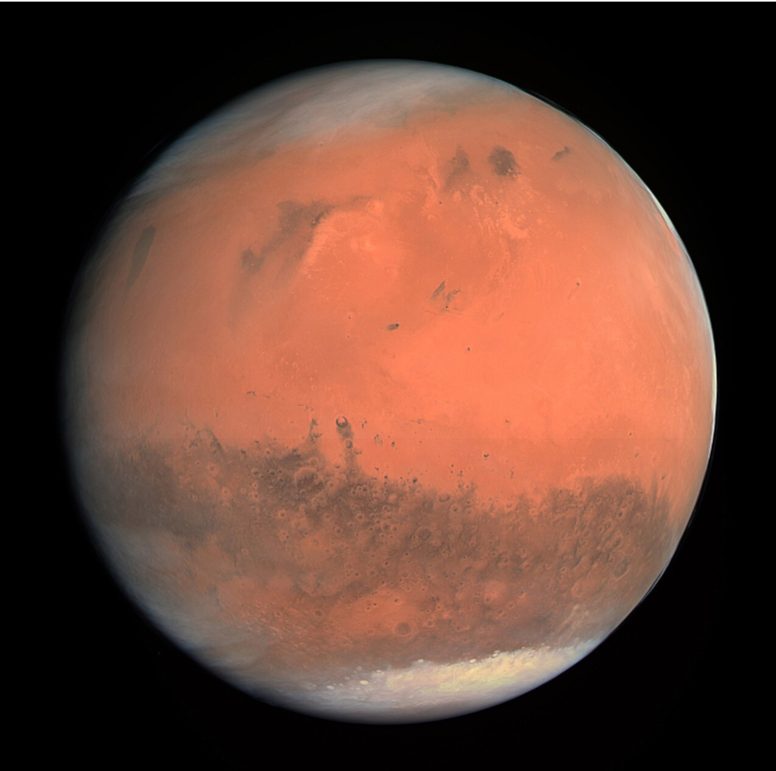
Whenever we gaze up at the night sky, one faint reddish point of light almost always catches our attention. It isn’t an ordinary star — it’s our neighboring planet, Mars. For centuries, humans have looked at this planet with curiosity and fascination. In ancient times it was named after the god of war, and in today’s scientific age, it is being seriously considered as humanity’s next possible home. In this blog, let’s explore Mars in detail — its structure, history, exploration, and future possibilities.
Introduction to Mars and Its Position
Mars is the fourth planet from the Sun and sits right next to Earth. It is one of the four inner rocky planets of the solar system (Mercury, Venus, Earth, and Mars). Its diameter is about 6,779 kilometers, roughly half the diameter of Earth. Mars has only about 10.7 percent of Earth’s mass, which means its gravity is also much weaker — about 38 percent of Earth’s gravity.
Mars orbits the Sun at an average distance of about 228 million kilometers, and it takes roughly 687 Earth days to complete one orbit. Interestingly, a day on Mars (called a “sol”) is very close to a day on Earth — about 24 hours and 37 minutes. This similarity has made it much easier for scientists to study Martian weather patterns and seasonal cycles.
The Mystery Behind the Red Color
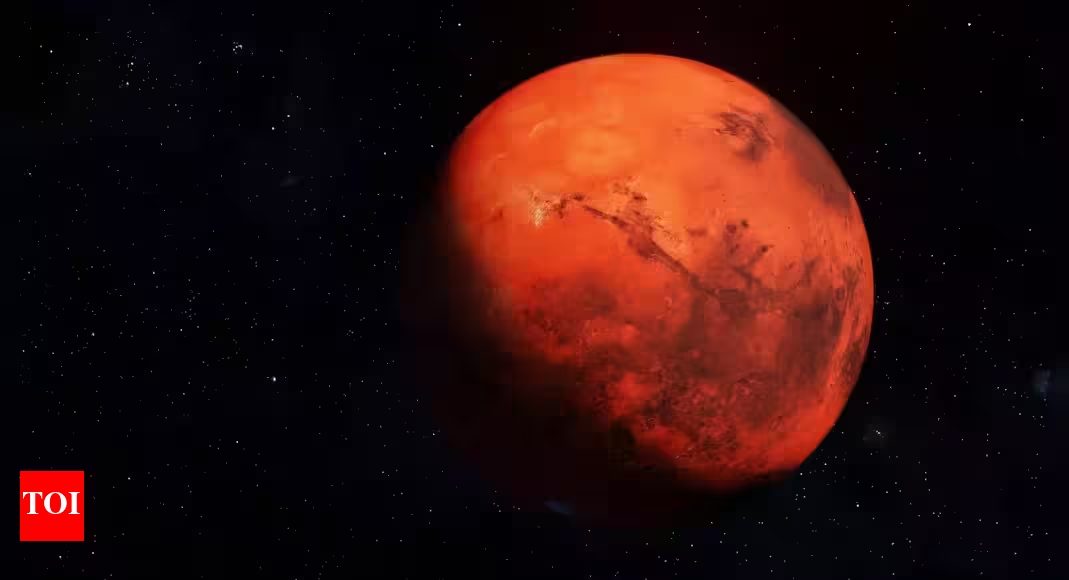
Why is Mars called the “Red Planet”? The answer lies in the soil on its surface. Mars’ surface contains large amounts of iron oxide — essentially rust. Just as iron rusts when exposed to water and air, the iron-rich dust on Mars has oxidized over billions of years, giving it a reddish-brown color. This dust covers the entire planet’s surface, which is why Mars appears red when viewed from space.
Mars’ Atmosphere and Climate
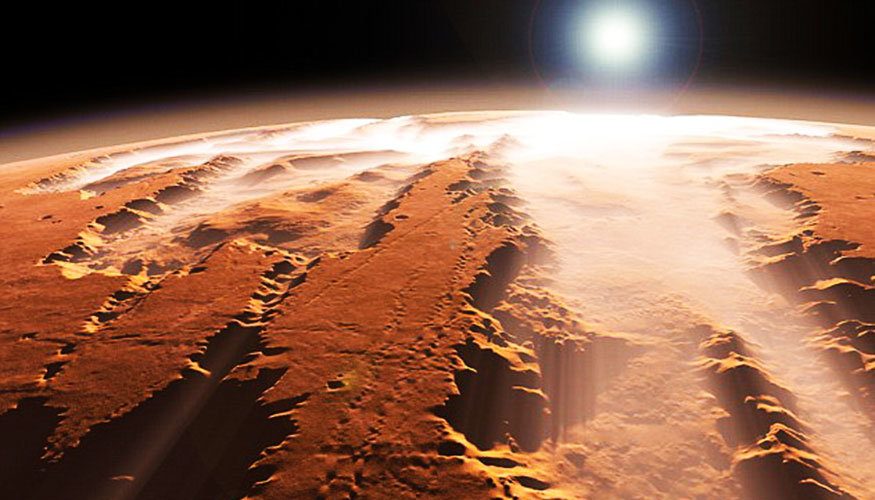
Mars’ atmosphere is extremely thin compared to Earth’s — only about 1 percent as dense. It consists mainly of carbon dioxide (about 95 percent), along with small amounts of nitrogen and argon. Because the atmosphere is so thin, Mars experiences extreme temperature swings. Daytime temperatures can reach around 20°C, while nighttime temperatures can plummet to as low as -140°C.
Dust storms are another distinctive feature of Mars. These storms can sometimes grow so large that they engulf the entire planet and last for months. In 2018, one such global dust storm permanently disabled NASA’s Opportunity rover, as the lack of sunlight prevented its solar panels from recharging.
The Discovery of Water: A Major Breakthrough
One of the most exciting discoveries in Mars research is the evidence of water. Scientists have found dried-up river valleys, ancient lakebeds, and delta-like formations on the Martian surface, indicating that liquid water once flowed there billions of years ago.
Today, water exists on Mars mainly as ice at the polar ice caps, largely a mixture of carbon dioxide ice and water ice. Additionally, some scientific studies have suggested the possible presence of liquid saltwater lakes beneath the Martian surface. This discovery is significant because wherever water exists, the possibility of life increases.
Did Life Ever Exist on Mars?
This is a question that has intrigued both scientists and the general public for years. No mission has yet found direct evidence of life on Mars, but certain clues offer hope. Organic molecules — the building blocks of life — have been found in Martian rocks. Additionally, seasonal fluctuations in methane gas have also been recorded, which could originate either from geological processes or possibly from microbial activity.
NASA’s Perseverance rover is currently exploring these very possibilities in Jezero Crater, a site that once held an ancient lake and river delta. The rover is collecting rock samples that will eventually be brought back to Earth for detailed analysis in the future.
Mars’ Two Moons: Phobos and Deimos
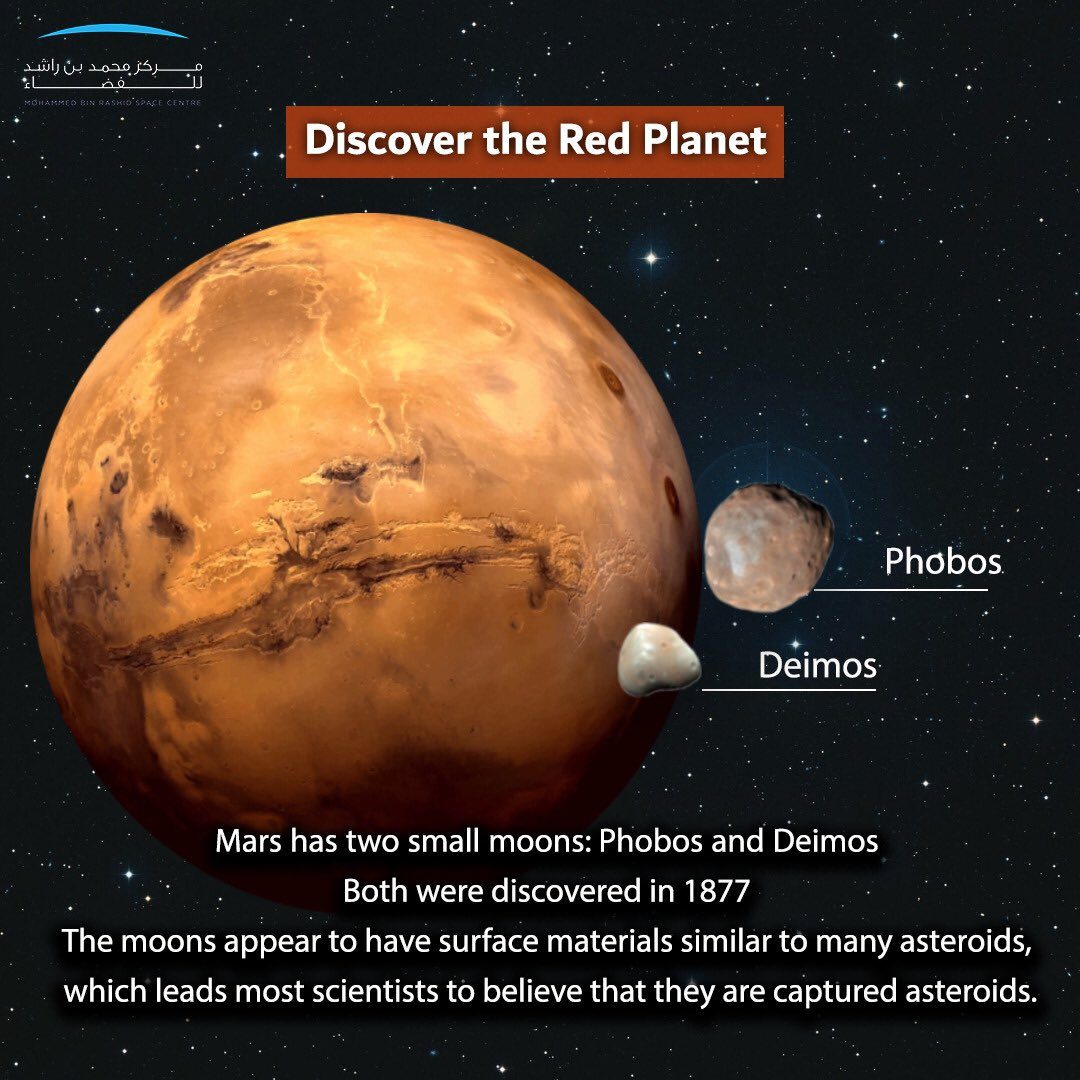
Mars has two small natural satellites — Phobos and Deimos. Both are tiny and irregularly shaped, leading scientists to believe they were likely asteroids from the asteroid belt that were captured by Mars’ gravity. Phobos orbits so close to Mars that scientists predict it will either crash into the planet or break apart into a ring within the next few million years.
The History of Mars Exploration
Humans have sent numerous missions to study Mars over the decades. In 1965, NASA’s Mariner 4 spacecraft captured the first close-up images of Mars. This was followed by the Viking missions, Mars Pathfinder, the Spirit and Opportunity rovers, the Curiosity rover, and now the Perseverance rover along with the Ingenuity helicopter — all of which have played crucial roles in uncovering the mysteries of Mars.
India has also made its mark in this field. The Indian Space Research Organisation (ISRO) launched the Mars Orbiter Mission, known as Mangalyaan, in 2013, and India became the first country to successfully reach Mars orbit on its very first attempt. This achievement was remarkable not just technically but also economically, as the mission was completed on an extraordinarily low budget.
The Future: Will Humans Settle on Mars?
Today, Mars is no longer just a subject of scientific curiosity — it has become a potential direction for the future of human civilization. Private companies like SpaceX are working on the ambitious goal of establishing a human colony on Mars. The reasoning behind this is that humanity should become a “multi-planetary species,” ensuring the survival of civilization in case of a major natural or human-made catastrophe on Earth.
However, settling on Mars is far from easy. Challenges such as its thin atmosphere, harmful radiation, extreme cold, and limited availability of water and oxygen stand as major obstacles for scientists. To address these challenges, scientists are also considering concepts like “terraforming” — gradually transforming Mars’ environment to resemble Earth’s — though this remains a distant and largely theoretical idea for now.
Conclusion
Mars, once part of ancient civilizations’ mythologies, has today become one of the most exciting fields of scientific and technological study. Its red soil hides a rich history, traces of once-flowing water, and future possibilities of human settlement — all of these aspects make it the most fascinating planet in our solar system. As our technology continues to advance, the layers of mystery surrounding Mars continue to unfold. Perhaps in the coming decades, we will witness humans taking their first steps on the soil of this red planet — a moment that will be etched into human history forever.