

Mars: Diving Deep into the Mysteries of the Red Planet
August 6, 2026
पानी से जुड़े 7 मज़ेदार विज्ञान प्रयोग
August 21, 2026
Introduction
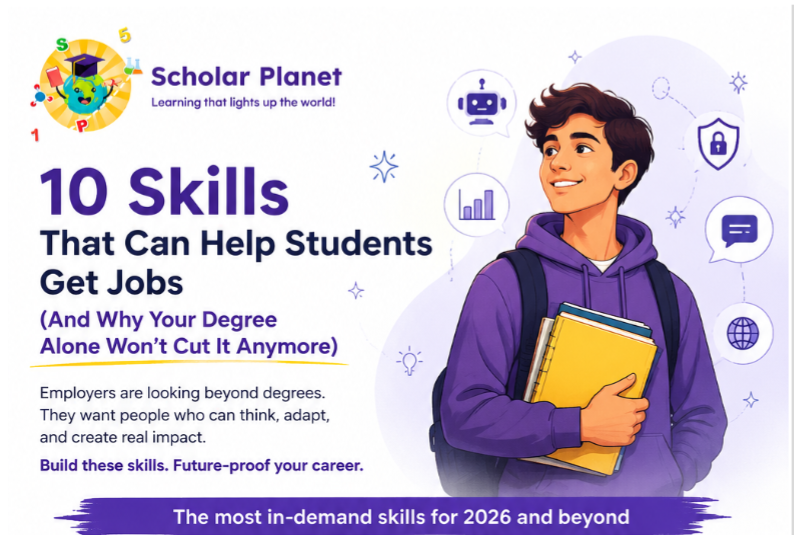
Getting a good job today takes more than just a degree. Employers now look for skills that help students get jobs — practical abilities that show you can think, communicate, and adapt in the real world. According to the World Economic Forum’s Future of Jobs Report 2025, nearly 39% of core job skills will change by 2030, and most employers say the skills gap is their biggest hiring challenge.
The good news? These skills don’t need an expensive course. They can be built through daily practice, small projects, and the right mindset. In this blog, we break down the 10 most important employability skills for students in 2026 — and simple ways to start building each one today.
1. AI Fluency
Knowing how to use AI tools well is now one of the fastest-growing skills students need for jobs. It’s not about knowing every tool — it’s about using AI to work faster, checking its answers carefully, and knowing when not to rely on it.
How to build this skill: Practice using AI tools for one regular task, like summarizing notes or drafting an assignment, and learn to spot when the output needs fixing.
2. Data Literacy
You don’t need to be a data scientist to read a spreadsheet and explain what it means. Employers value students who can look at numbers and turn them into simple, useful insights — a core part of digital skills for career growth.
How to build this skill: Start with Excel or Google Sheets. Learn basic formulas and charts, then practice writing one-line takeaways from any data you find.
3. Analytical and Critical Thinking
Analytical thinking has topped the World Economic Forum’s core skills list for years. It means breaking a big problem into smaller, manageable parts instead of guessing your way through it — one of the most tested job-ready skills in interviews.
How to build this skill: Practice solving case studies or real business problems step-by-step before checking how experts solved them.
4. Communication Skills
Clear writing and speaking often matter more than technical knowledge. Poor communication is one of the top reasons candidates lose out, even when they’re skilled — making this one of the most essential soft skills for students.
How to build this skill: Practice writing short, clear updates. Post on LinkedIn regularly to get comfortable expressing ideas in fewer words.
5. Basic Cybersecurity Awareness
As more work moves online, employers expect students to understand digital safety basics — spotting phishing emails, using strong passwords, and protecting sensitive data. This is part of the growing demand for tech skills for jobs.
How to build this skill: Take a free beginner course on cybersecurity basics from platforms like Google or Coursera.
6. Adaptability and Resilience
Plans change fast in every workplace. Employers want students who can handle setbacks calmly and adjust quickly — a skill that’s rising sharply in importance, according to WEF data on future-ready skills for students.
How to build this skill: After something doesn’t go as planned, write down what you did next. This becomes valuable material for interview answers.
7. Emotional Intelligence and Teamwork
Many group projects fail not from lack of knowledge, but from poor communication and ego clashes. Employers notice who listens, resolves conflict calmly, and lifts the whole team — a key part of workplace skills for students.
How to build this skill: Pay attention to how conflicts are handled in group work, and practice addressing tension calmly instead of avoiding it.
8. Creative Problem-Solving
Creative thinking is rising just as fast as analytical thinking on employer skill lists. Companies want students who can suggest fresh ideas and also test whether those ideas actually work — a valuable 21st-century skill for students.
How to build this skill: Practice generating multiple solutions to small problems before picking the best one.
9. Personal Branding and Networking
Many internships and entry-level jobs go to candidates who were noticed before they even applied. A simple, consistent presence on LinkedIn — sharing projects and learnings — is one of the most underrated career skills for students.
How to build this skill: Post about real projects or things you’re learning, and reach out to professionals with specific, genuine questions.
10. Continuous Learning and Self-Management
The skills gap keeps growing because most people stop learning after getting a job title. Students who build a habit of learning something new regularly stay relevant much longer — a core part of lifelong learning skills for career success.
How to build this skill: Set aside time each week to learn something small and unscheduled. Practice managing your own deadlines on personal projects.
Conclusion
You don’t need to master all ten skills that help students get jobs overnight. Pick two or three that feel weakest, build them through real projects over the next few months, and be ready to talk about them with real examples in interviews. That’s what actually gets you hired in 2026 — not one more line on a resume, but proof that you can think, adapt, and grow.
FAQs
Q1. What are the most important skills that help students get jobs in 2026? AI fluency, data literacy, analytical thinking, communication, and adaptability are among the most in-demand skills employers look for in 2026, according to the World Economic Forum.
Q2. Can students learn job-ready skills without a certification? Yes. Most employability skills — like communication, critical thinking, and adaptability — are built through real practice, projects, and daily habits rather than formal certification.
Q3. Why are soft skills as important as technical skills for students? Employers say technical tools change quickly, but soft skills like teamwork, communication, and resilience determine whether someone can actually apply their knowledge effectively at work.