पानी से जुड़े 7 मज़ेदार विज्ञान प्रयोग
August 21, 2026
सिर्फ नोट्स दोबारा पढ़ना काफी नहीं: एक्टिव रिकॉल की साइंस
September 7, 2026
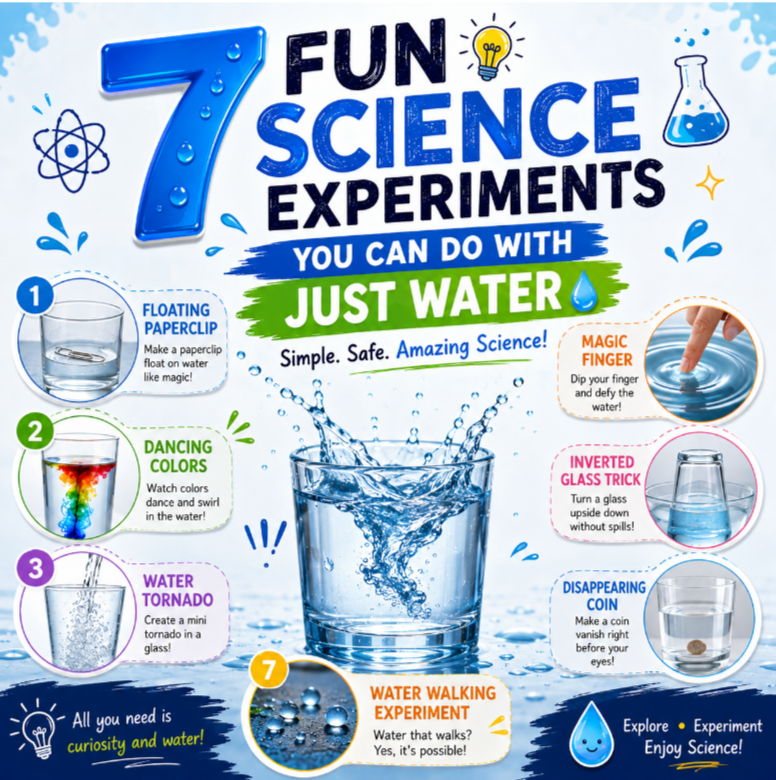
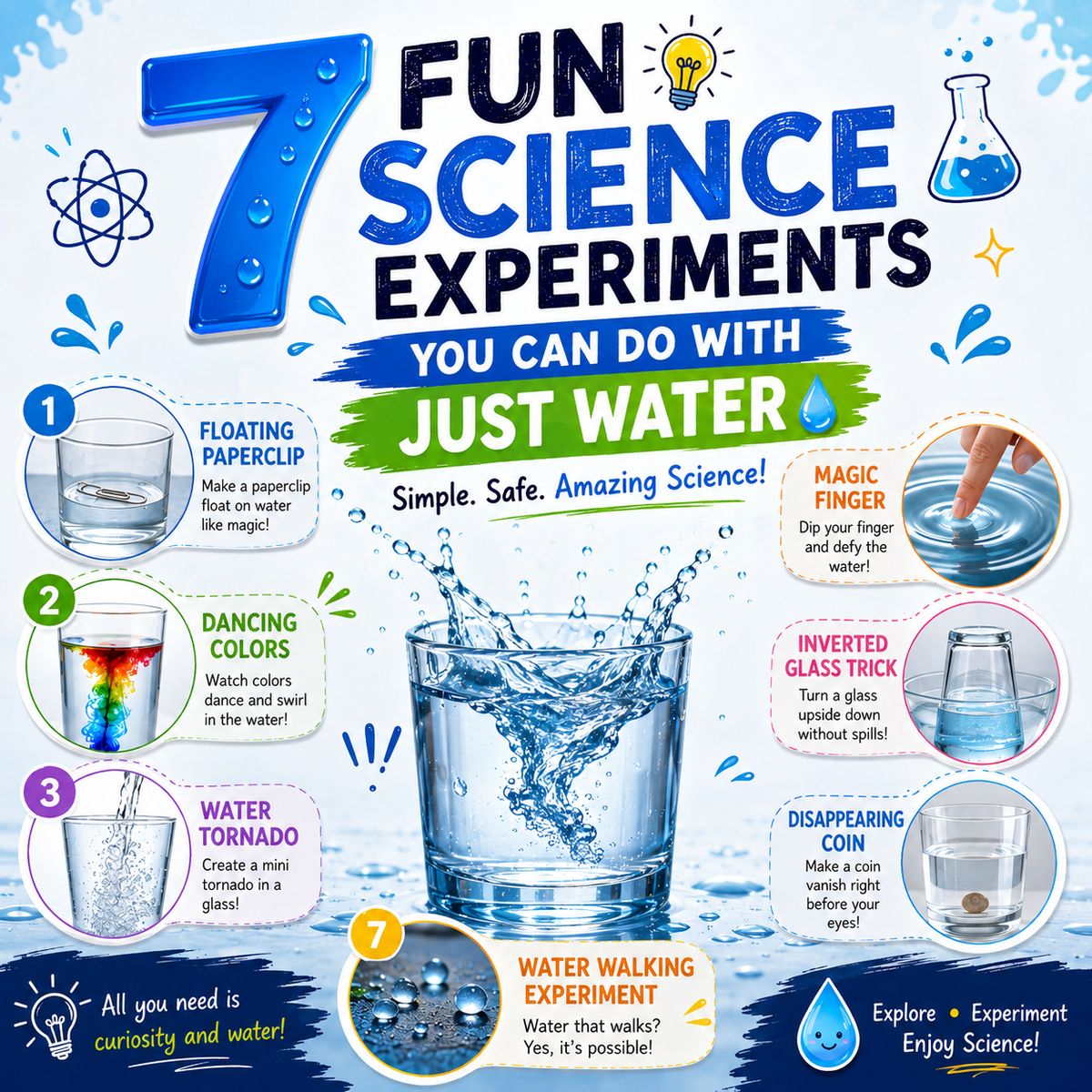
Water is the most underrated science teacher in your kitchen. It’s cheap, it’s safe, it’s everywhere — and it hides some genuinely surprising physics and chemistry inside it. You don’t need a lab coat or expensive equipment to explore these ideas. A few glasses, some everyday household items, and ten minutes of curiosity are enough.
Here are seven water experiments that are simple to set up, safe for students of almost any age (with basic adult supervision for the younger ones), and genuinely fun to watch unfold.
1. The Density Tower (Rainbow in a Glass)
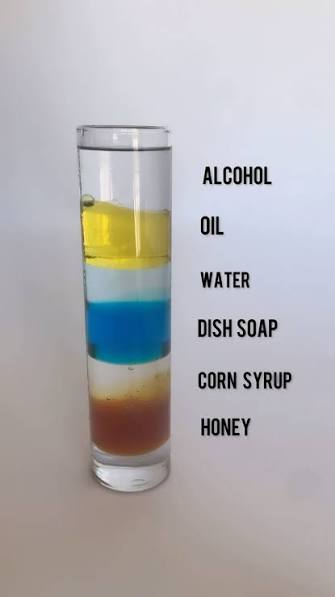
What you need: Honey, dish soap, water, vegetable oil, rubbing alcohol, food coloring, a tall clear glass.
What to do: Pour honey first, then dish soap, then colored water, then oil, and finally colored rubbing alcohol — each poured slowly down the side of the glass, one layer at a time.
What happens: Instead of mixing, the liquids stack into distinct colored bands, like a rainbow trapped in glass.
The science: Every liquid has a different density — essentially, how tightly its molecules are packed. Denser liquids sink below lighter ones, so honey (the densest) settles at the bottom while alcohol (the lightest) floats on top. This is the same principle that explains why oil floats on water in a puddle, and why hot air balloons rise through cooler, denser air.
2. Walking Water
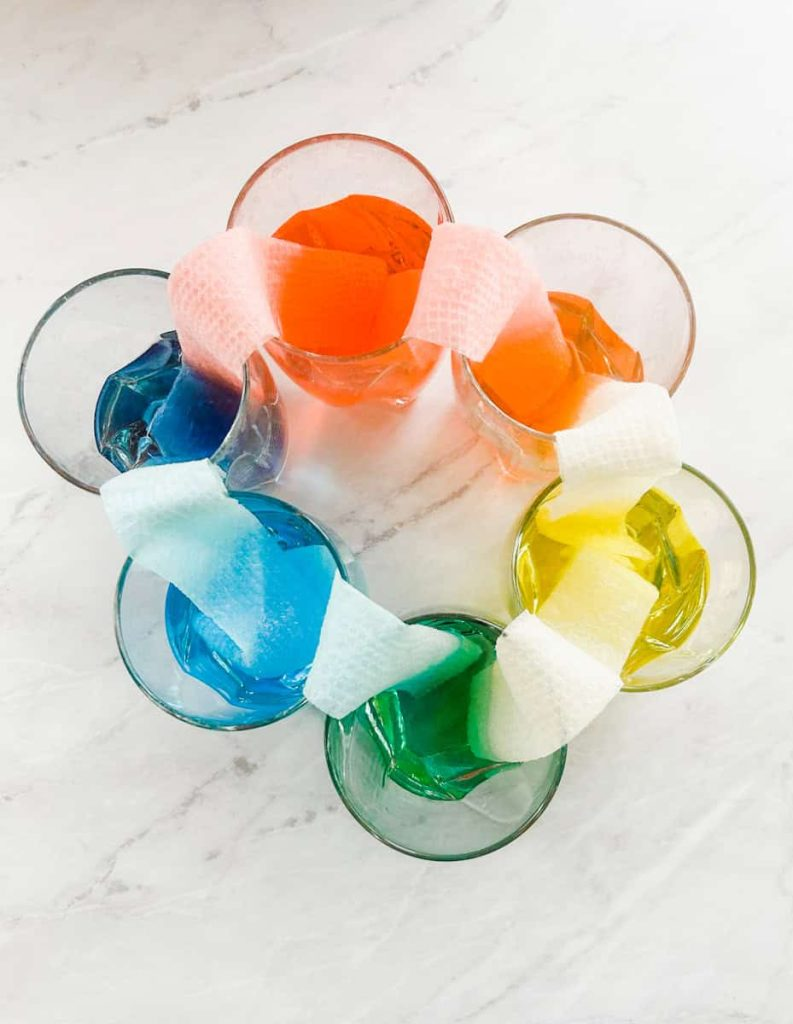
What you need: Three clear cups, water, food coloring (red, yellow, blue), paper towels.
What to do: Arrange the cups in a row — fill the first and third with colored water, leave the middle one empty. Fold paper towels into strips and place one end in a full cup, the other end in the empty cup, connecting all three cups in a chain.
What happens: Over a few hours, the colored water “climbs” up the paper towel and travels into the empty cup, and where two colors meet, they blend into a new one.
The science: This is capillary action — the same force that lets tree roots pull water up toward the leaves. Paper towels are made of tiny fibers with even tinier gaps between them. Water molecules are attracted to these fibers (adhesion) and to each other (cohesion), so the water gets pulled upward against gravity, one fiber-gap at a time.
3. The Unspillable Water Glass
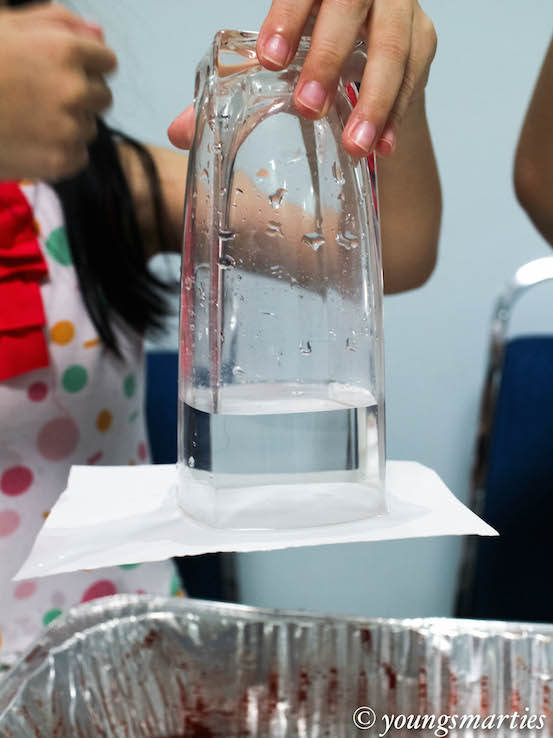
What you need: A glass filled to the very brim with water, an index card or a piece of stiff cardboard.
What to do: Place the card flat over the mouth of the glass, press gently, then hold it in place while you flip the whole thing upside down over a sink (just in case). Slowly let go of the card.
What happens: The card stays stuck to the glass, and the water doesn’t fall out.
The science: This is atmospheric pressure in action. Air is pushing on everything around us all the time — about 14.7 pounds per square inch at sea level, which is more than enough to hold up the card and the water inside it. Since there’s no air trapped inside the glass to push back on the card from above, the upward push of the atmosphere below wins the battle against gravity.
4. The Floating and Sinking Egg
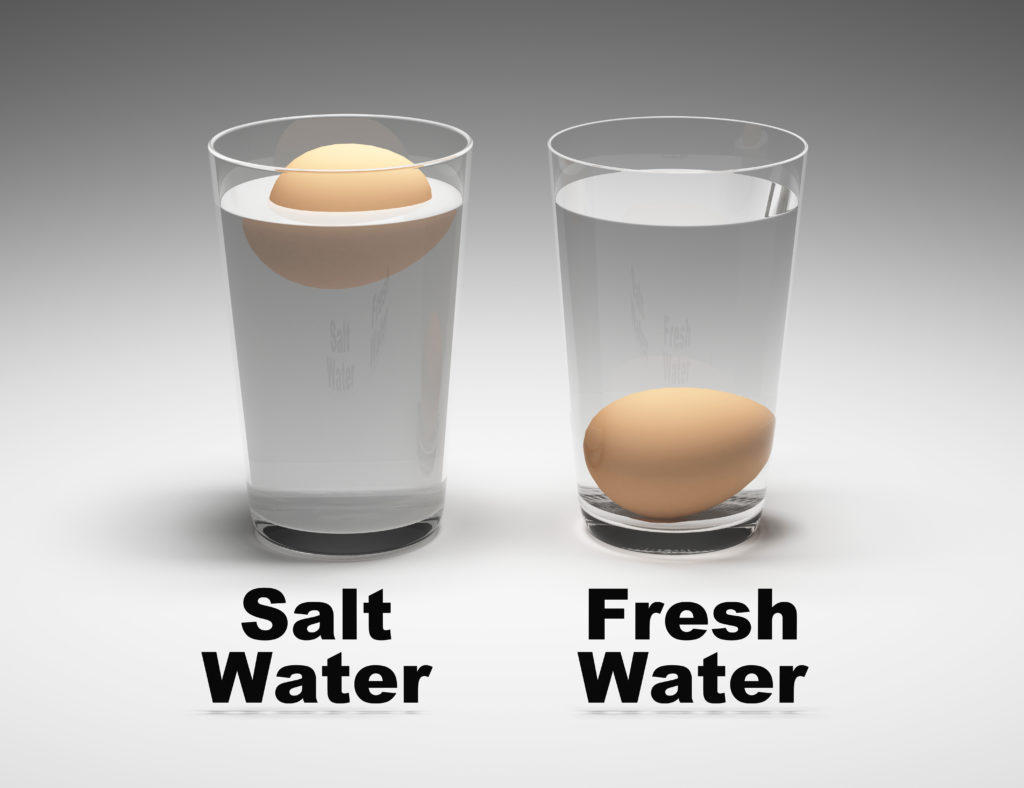
What you need: Two glasses of water, salt, a raw egg.
What to do: Gently lower the egg into a glass of plain tap water — it sinks. In a second glass, stir in several tablespoons of salt until it dissolves, then lower the egg in.
What happens: The egg floats in the salty water but sinks in the plain water.
The science: Adding salt to water increases its density without changing its volume much — you’re packing more mass into the same space. Once the salt water becomes denser than the egg itself, the egg floats, just as swimmers find it easier to float in the ocean than in a freshwater lake. This is also exactly why the Dead Sea, one of the saltiest bodies of water on Earth, makes it almost impossible for a person to sink.
5. Instant Rain in a Jar
What you need: A clear glass jar, hot water, ice cubes, a small plate, food coloring (optional).
What to do: Fill the jar about a third full with hot water, then place a plate with ice cubes on top of the jar as a lid.
What happens: Within a couple of minutes, water droplets form on the underside of the plate and begin to “rain” down into the jar.
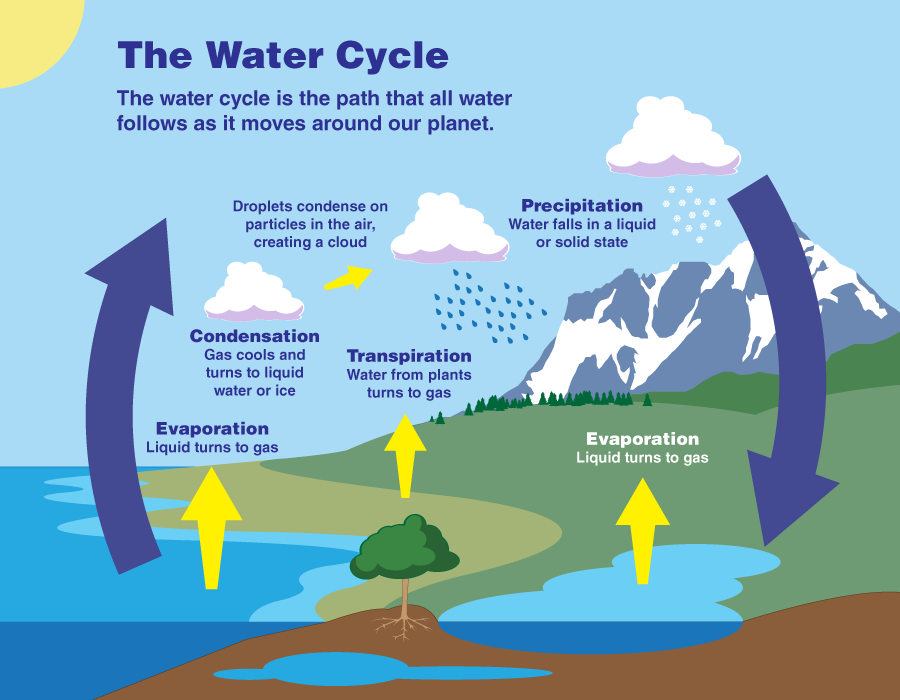
The science: This is a miniature version of Earth’s water cycle. The hot water evaporates, turning into water vapor that rises. When that vapor hits the cold plate above, it cools rapidly and condenses back into liquid droplets — the same process that forms clouds when warm, moist air rises and meets cooler air higher in the atmosphere, eventually falling back down as rain.
6. The Balloon That Won’t Pop Over a Flame
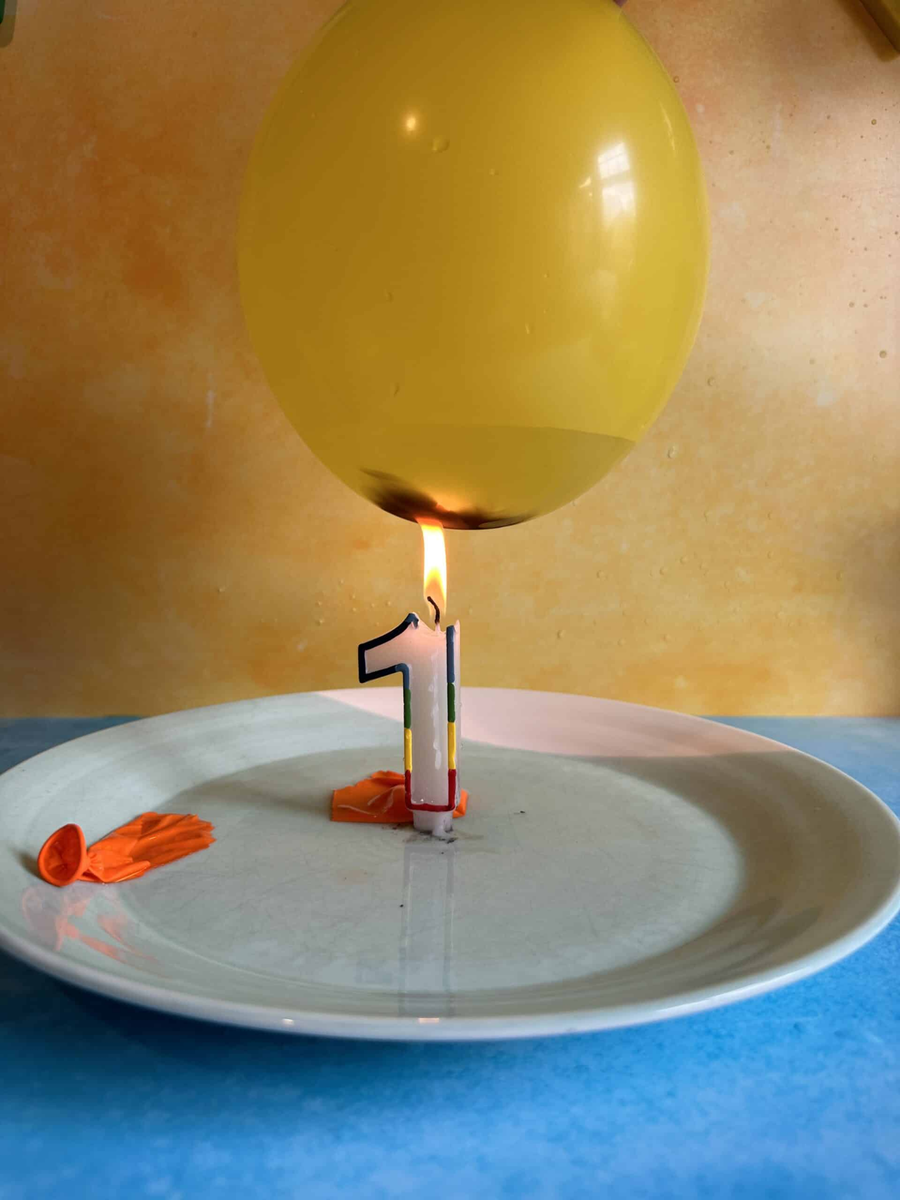
What you need: Two balloons, water, a candle or lighter (adult supervision required).
What to do: Blow up one balloon with just air and hold it briefly over a flame — it pops almost instantly. Fill a second balloon partly with water before inflating it, then hold that one over the same flame.
What happens: The water-filled balloon doesn’t pop, even though the flame is touching it directly.
The science: Water has an unusually high heat capacity — it can absorb a large amount of heat energy without a big rise in temperature. When the flame touches the balloon, the water inside absorbs the heat almost as fast as it arrives, keeping the rubber right at that spot cool enough that it never reaches its melting point. Without water, the air-filled balloon has nothing to soak up the heat, so the rubber weakens and bursts almost immediately.
7. Cartesian Diver (The Water Bottle Submarine)
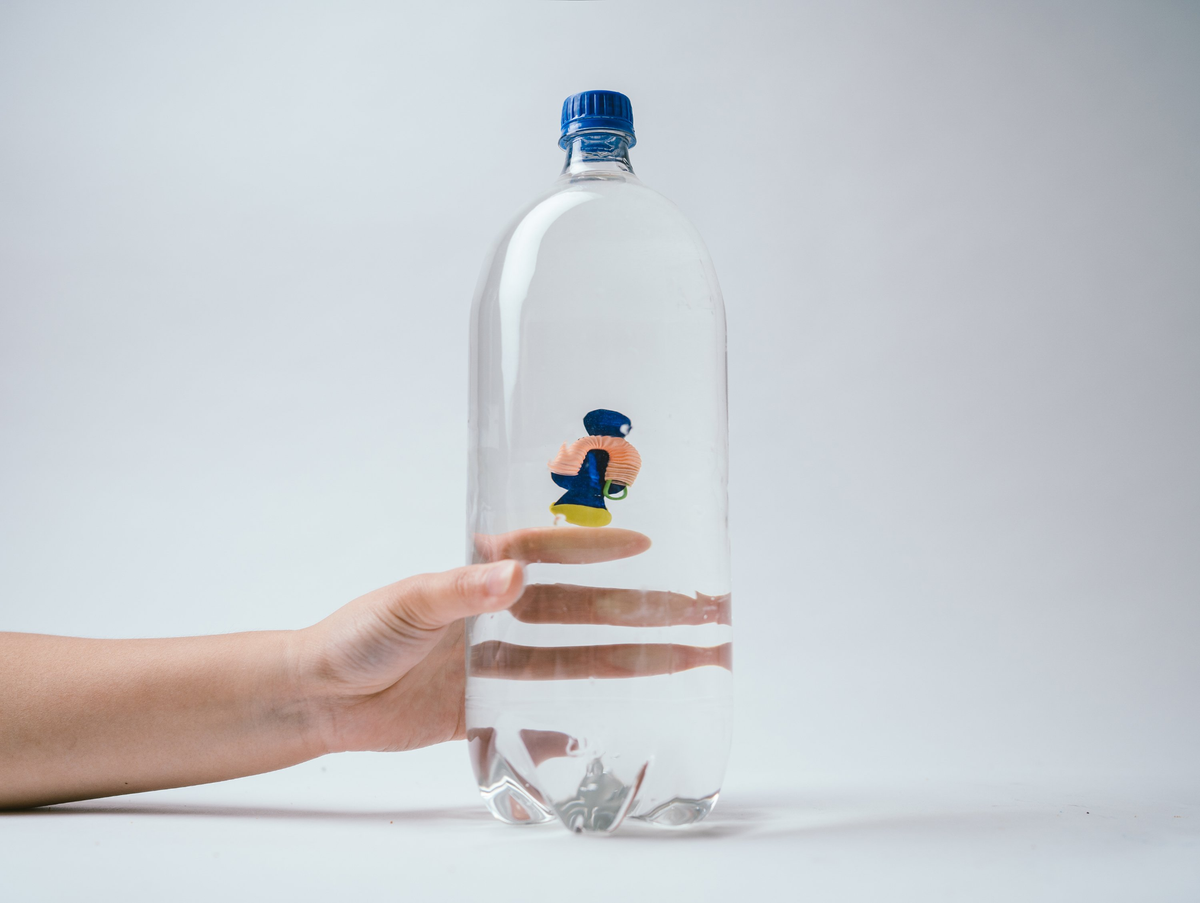
What you need: A clear plastic bottle filled with water, a small packet from soy sauce or a small glass dropper, all sealed inside the bottle.
What to do: Fill the bottle almost to the top with water, drop in the packet (it should float, just barely), seal the cap tightly, and then squeeze the sides of the bottle.
What happens: As you squeeze, the little diver sinks. Release your grip, and it floats back up.
The science: This experiment is a hands-on demonstration of Pascal’s Law and buoyancy. Inside the packet or dropper is a small pocket of trapped air. Squeezing the bottle increases the water pressure, which compresses that trapped air pocket, making the diver slightly denser than the surrounding water — so it sinks. Releasing the pressure lets the air pocket expand again, making the diver buoyant enough to rise. It’s the exact same principle that real submarines use, just with ballast tanks instead of a soy sauce packet.
Why These Experiments Matter
None of these experiments need a laboratory — just a curious mind and a kitchen counter. What makes them worth doing isn’t just the “wow” moment, but what they quietly teach: density, pressure, capillary action, heat capacity, and the water cycle are not abstract textbook terms once you’ve watched them happen in a glass in front of you.
The best science education often starts exactly like this — with a simple question like “what happens if I try this?” — and water, in all its ordinary, everyday familiarity, turns out to be one of the richest subjects to ask that question about.
Try one this weekend, and see which surprises you the most.