
Why Rereading Your Notes Isn’t Enough: The Science of Active Recall
September 8, 2026
प्याज काटने पर आँसू क्यों आते हैं? एक रसोई विज्ञान प्रयोग
September 12, 2026
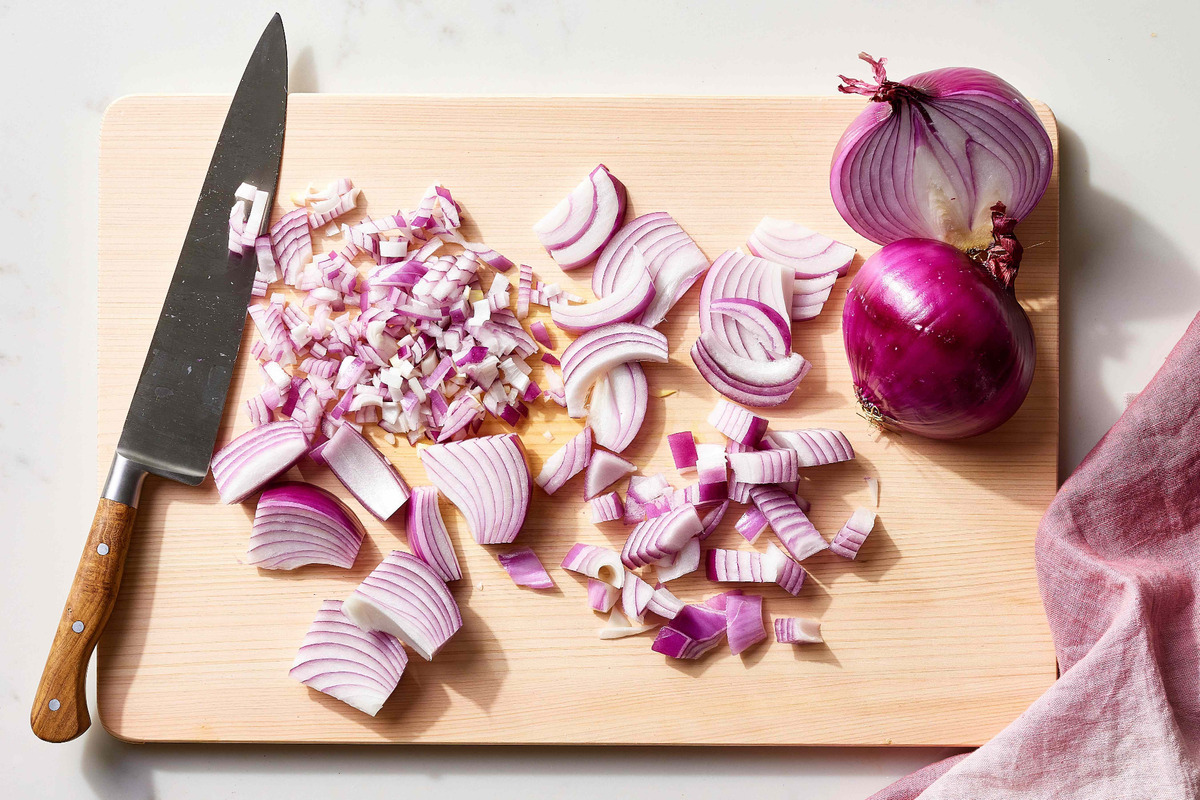
You’re standing at the kitchen counter, knife in hand, halfway through chopping an onion for dinner — and suddenly your eyes are stinging, watering, and you have no idea why something so small and harmless-looking is making you cry. It happens to almost everyone, whether you’re a seasoned cook or chopping your first onion ever. But have you ever wondered why it happens?
Let’s break down the science behind onion tears — and try a simple experiment to understand it better.
The Science Behind the Tears
Onions are more than just a kitchen staple — they’re actually built with a clever chemical defence system to protect themselves from being eaten by animals and insects.
Here’s what happens step by step:
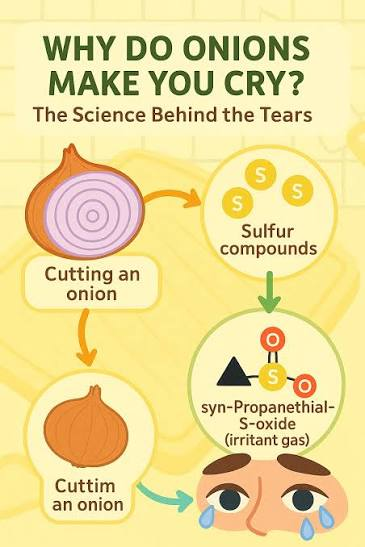
- Inside an intact onion, there are two things sitting separately in different cells: an enzyme called alliinase and sulfur-containing compounds called amino acid sulfoxides.
- When you cut the onion, you break open its cells. This lets the enzyme and the sulfur compounds mix together for the first time.
- This mixing triggers a chemical reaction that produces a volatile gas called syn-propanethial-S-oxide — often nicknamed the “onion tear gas.”
- This gas rises up and reaches your eyes, where it reacts with the water in your tears to form a mild sulfuric acid.
- Your eyes sense this irritation and immediately trigger your tear glands to produce more tears — trying to wash the irritant away. That’s the stinging, watery feeling you experience.
In short: cutting an onion isn’t just a mechanical action — it’s chemistry happening right there in your kitchen, in real time.
Try It Yourself: A Simple Kitchen Experiment
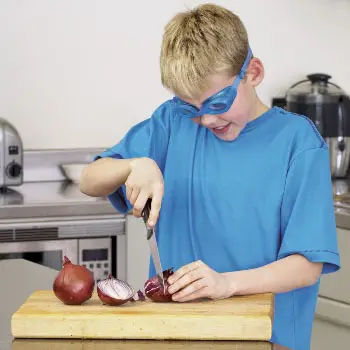
You don’t need a lab to see this science in action. Try this at home with an adult’s supervision if you’re a younger student.
What you’ll need:
- One onion
- A knife and cutting board
- A pair of swimming goggles (optional, but great for the experiment!)
- A bowl of water
Steps:
- Cut the onion normally, without any precautions, and notice how quickly your eyes react.
- Now take a fresh onion and try cutting it while wearing swimming goggles. Notice the difference.
- As a control step, try chilling an onion in the fridge for 15–20 minutes before cutting it, and see if the effect is milder.
- Try cutting the onion underwater (partially submerged in a bowl of water) and observe what happens.
What you should observe:
- Wearing goggles blocks the gas from directly reaching your eyes — so you’ll notice far less irritation.
- A chilled onion releases the gas more slowly, since cold temperatures slow down the chemical reaction, so your eyes react less.
- Cutting underwater traps the gas in the water instead of letting it rise into the air, which is why this trick works so well for many home cooks.
This is a great example of how a simple habit in the kitchen — chilling an onion, or wearing goggles — is actually based on real chemistry, not just an old wives’ tale.
Why This Matters
This experiment is a good reminder that science isn’t only something you find in textbooks or labs — it’s happening around you all the time, even in everyday tasks like cooking. Understanding why something happens (rather than just accepting that “onions make you cry”) is what scientific thinking is all about: observing an effect, asking questions, and testing out explanations.
Next time you’re chopping onions and your eyes start watering, you’ll know exactly what’s going on inside that onion — and you might even want to test out a trick or two to stop the tears.
Quick Recap
| Step | What Happens |
| Onion is cut | Cells break open |
| Enzyme + sulfur compounds mix | Chemical reaction begins |
| Gas is released | Rises toward your eyes |
| Gas reacts with tear moisture | Forms a mild acid |
| Eyes react | Tears are produced to flush it out |
Try this experiment at home, and see which trick works best for you — goggles, chilling, or cutting underwater. And if you do, we’d love to hear about your results!
Curious about more everyday science? Explore more kitchen and home experiments with us, and turn your daily routine into a science lab.