रसोई की चीज़ों से करें ये शानदार साइंस एक्सपेरिमेंट
July 21, 2026
Kargil Vijay Diwas: The Untold Stories of Courage That Won Back the Peaks
July 24, 2026
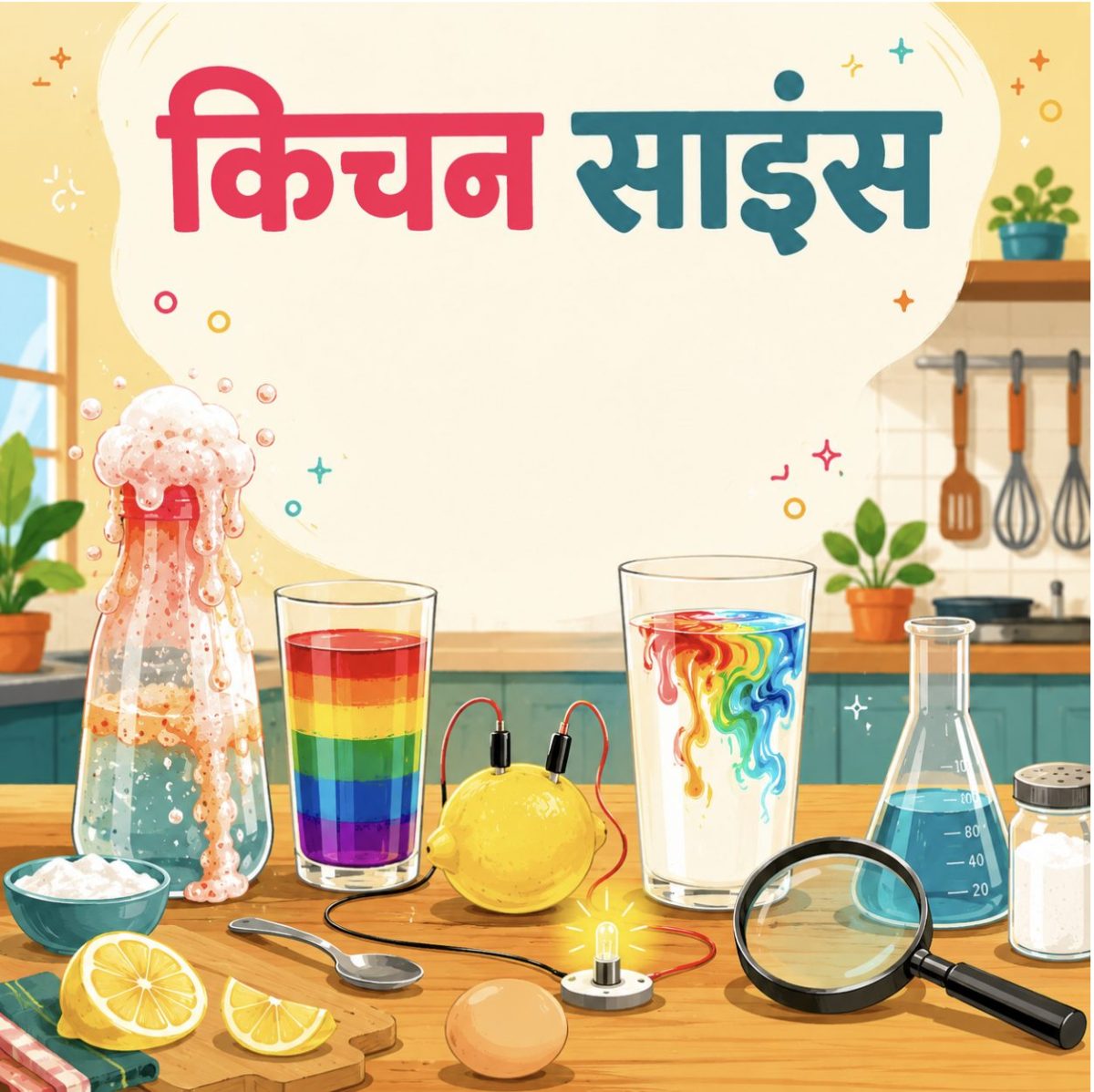
Have you ever thought that your kitchen isn’t just a place to cook — it could also be a tiny science lab? Salt, baking soda, vinegar, lemon, milk, eggs — all these things we use every single day are secretly hiding a whole world of chemistry, physics, and biology inside them. In this blog, we’ve brought together several fun and easy experiments that you can try at home, either with your kids or just on your own. Along with each experiment, we’ve also explained why it happens, so you have fun while learning something new too.
Let’s dive into this fascinating journey.
1. Baking Soda Volcano
This is the most famous, classic kitchen experiment, and it’s still just as exciting today as it’s always been.
You’ll need:
- 2 teaspoons baking soda
- Half a cup of vinegar
- Red or orange food coloring (optional)
- A little liquid dish soap
- A small bottle or glass
How to do it: Put the baking soda into a bottle. Add the food coloring and a bit of dish soap to it. Now slowly pour in the vinegar and step back — a foamy fountain will erupt!
The science behind it: Baking soda is a base and vinegar is an acid. When the two combine, a chemical reaction takes place that produces carbon dioxide gas. This gas tries to escape rapidly in the form of bubbles, creating that explosive foamy eruption. The soap makes the foam thicker and longer-lasting.
2. The Floating and Sinking Egg
You’ll need:
- One raw egg
- Two glasses of water
- Salt
How to do it: Fill one glass with plain water and drop the egg in — it will sink. In the second glass, dissolve 4-5 teaspoons of salt thoroughly into the water, then add the egg — this time it will float!
The science behind it: This is all about density. Adding salt makes the water denser than the egg, which is why the egg floats to the top. This is the same principle behind why it’s easier to float in the salty ocean — in the Dead Sea, people float effortlessly because its water is extremely salty.
3. Magic Milk Experiment
You’ll need:
- Full-cream milk
- A few drops of food coloring
- Liquid dish soap
- A cotton swab or your finger
How to do it: Pour milk into a plate to spread it out. Add drops of different food colors at various spots. Now dip a cotton swab into dish soap and touch it to the center of the milk — the colors will come alive, dancing and spreading out!
The science behind it: Milk contains fat and protein. When soap touches the milk, it starts breaking down the fat molecules and disrupts the surface tension. This causes the milk molecules to rush around rapidly, carrying the colors along with them — which is why the colors appear to dance.
4. Can a Lemon Really Make Electricity? (Lemon Battery)
You’ll need:
- 2-3 lemons
- Galvanized (zinc) nails
- Copper coins or copper wire
- A small LED light
- Connecting wires
How to do it: Insert one zinc nail and one copper wire into each lemon (making sure they don’t touch each other). Using wires, connect the copper wire of one lemon to the zinc nail of the next lemon, linking all the lemons in series. Finally, connect the two remaining loose ends to the LED — if wired correctly, the LED will light up faintly.
The science behind it: The citric acid in lemons acts as an electrolyte. When two different metals (zinc and copper) are dipped into this acid, a chemical reaction begins that causes a flow of electrons — in other words, electricity is generated. This is the same principle behind how modern batteries work.
5. The Bouncy Egg
You’ll need:
- One raw egg
- Vinegar
- A glass jar
How to do it: Submerge the egg in a jar full of vinegar and let it sit for 24-48 hours, changing the vinegar occasionally. After a couple of days, the hard shell will completely dissolve, and the egg will turn soft, rubbery, and translucent. You can now gently bounce it a little (carefully, and never from a height!).
The science behind it: An eggshell is made of calcium carbonate. The acetic acid in vinegar reacts with this calcium carbonate, dissolving it and releasing carbon dioxide gas (you’ll see bubbles forming around the egg). Once the shell dissolves, the inner membrane remains — and since it’s flexible, the egg ends up feeling rubbery.
6. Inflating a Balloon With Vinegar and Baking Soda
You’ll need:
- An empty plastic bottle
- Vinegar
- Baking soda
- A balloon
How to do it: Pour a little vinegar into the bottle. Fill the balloon with baking soda. Now stretch the balloon’s opening tightly over the mouth of the bottle (making sure the soda doesn’t fall in yet). Then lift the balloon upright so all the soda drops into the bottle — the balloon will start inflating on its own.
The science behind it: The same acid-base reaction from the volcano experiment is at play here. Since the bottle is sealed, the carbon dioxide gas produced has nowhere to escape except into the balloon, causing it to inflate. It’s a great way to visualize gas pressure.
7. Rainbow in a Glass (Density Layers)
You’ll need:
- Honey, milk, dish soap, lightly colored water, oil, colored rubbing alcohol
- A tall, clear glass
How to do it: Pour the densest liquid (honey) into the glass first. Then, very slowly and carefully, pour the remaining liquids one by one along the side of the glass, in order of density (dish soap, milk, water, oil, and finally the colored alcohol on top). If poured carefully, each layer will remain distinct, forming a colorful tower.
The science behind it: Every liquid has a different density. Denser liquids always settle at the bottom while lighter ones float on top, since they don’t easily mix with each other (especially oil and water). This experiment brings the concept of density to life right before your eyes.
8. Invisible Ink (Secret Lemon Messages)
You’ll need:
- Lemon juice
- A cotton swab or thin brush
- Plain paper
- A candle or light bulb (for heat)
How to do it: Dip a cotton swab in lemon juice and write a message on paper. Once it dries, the message will be completely invisible. To read it, gently warm the paper near a bulb or low flame — the writing will emerge in a light brown color.
The science behind it: The carbon compounds in lemon juice soak into the paper’s fibers and remain colorless. But when exposed to heat, these compounds oxidize and turn brown — appearing before the rest of the paper does, because lemon juice has a lower burning point than the paper itself.
9. The Balloon That Won’t Burst Over a Flame
You’ll need:
- 2 balloons
- Water
- A candle/lighter
How to do it: (Only attempt this experiment under adult supervision) Fill one balloon with just air and bring it near a candle flame — it will pop instantly. Fill the second balloon with some water first, then air, and bring it near the flame — this balloon won’t burst (at least not immediately)!
The science behind it: Water has an incredible ability to absorb heat. When the flame touches the balloon, the water instantly absorbs that heat and keeps the rubber from getting hot enough to burst. This is a fantastic (though carefully-supervised) way to demonstrate water’s heat capacity.
10. Fruit Battery Tester — Which Fruit Is the Most “Powerful”?
Taking the lemon battery experiment further, try repeating it with potatoes, tomatoes, oranges, and apples, and if you have a multimeter, measure the voltage each one produces. This can also make for a great science fair project, where you note which fruits or vegetables have higher acid content and therefore generate the most electricity.
Important Safety Notes
Science experiments are fun, but a few precautions are essential:
- Always do experiments involving fire, candles, or hot objects under adult supervision.
- Never eat anything used in an experiment (like an egg soaked in vinegar).
- Lay down old newspaper or cloth before starting, so cleanup is easy.
- Food coloring and vinegar can stain clothes, so wear old clothing.
- When doing experiments with young children, explain and guide them through each step — don’t rush.
Conclusion
You don’t need an expensive lab or heavy textbooks to learn science. The everyday items sitting in your kitchen — salt, vinegar, baking soda, lemon, milk — are quietly hiding a treasure trove of science. Through these experiments, kids will learn, and adults get a chance to relive that childhood curiosity too. So the next time you have a little free time in the kitchen, try “making science” along with making dinner!
If you try any of these experiments, do share your experience — which one did you enjoy the most?